





Chicken road casino review: how to start playing right now
Today is September 2025, and the two official releases of this crash-style title still attract fresh attention because versioning changed the way runs feel in practice. You get a 2024 original with unusually high long-run payback and a 2025 refresh that tweaks pacing and volatility. Before any deposit in USD, it’s smarter to confirm which build your lobby serves and whether the info panel mirrors provider wording. Demos on reputable catalogs help you spot mismatched labels without risking a balance. A small planning habit also reduces tilt, because burst games punish hesitation more than complex rules do. Treat difficulty as a volatility slider, not a badge of courage, and map exits before you start. The “golden egg” fantasy is cute, but timing is what governs outcomes round by round. Your aim here is to wire cash-out reflexes in demo, then copy the same rhythm with tiny stakes. When a casino promises instant anything, read the fine print about pending windows and compliance checks. Keep screenshots of banking steps so support tickets have timestamps, especially if you plan to test chickenroad variants later.

Create your chicken road account and verify details in minutes
Start by shortlisting EU-licensed venues that actually name the provider on the game page, because clones quietly drop attribution. Confirm that the listing shows four difficulty modes and offers a demo button you can open immediately. Cross-check RTP and max-win notes against at least two neutral catalogs for consistency. Do KYC before play so your first withdrawal doesn’t stall on identity checks at the worst time. Enable app-based 2FA and a withdrawal PIN to shut down basic takeover attempts. Keep a tiny ledger of deposits and cash-outs so your real timing matches the cashier’s promises. If a page claims “provably fair,” click through to find an explanation rather than a static badge. Use demo sessions to verify UI labels and pacing on your device prior to live stakes in USD. Plan a small test withdrawal right after KYC to validate the route end-to-end. Finally, bookmark the provider page and one catalog entry to compare wording whenever labels change around chicken road.
Pick an eu-licensed casino that offers the chicken road game
Look for InOut Games named on the game page, four fixed modes listed in the description, and a clearly visible demo. The official provider blurb mentions helping a bird reach a goal while avoiding hazards, which is language mirrored by major catalogs. You should see RTP disclosures in info panels or catalog sidebars, with the original widely cited at ninety-eight percent. The refreshed build is labeled 2.0 and appears with a reduced long-run return, which changes how longer paths feel. If your lobby hides provider or RTP text, cross-reference the title against independent indices. Avoid near-name domains that pitch unbounded wins or secret patterns, because those are classic clone markers. Whenever you find mismatches, assume you’re not looking at the official integration. The fastest quick-check is opening the free demo on a catalog and comparing difficulty names line for line. If the casino page and catalog page diverge, favor the catalog until proven otherwise. Keep those two tabs handy while you navigate chickenroad listings.
Complete registration, accept terms, and finish kyc verification steps
Upload a clear government ID and a recent proof of address before your first cash-out request. Match account details to your payment instrument to avoid name or address mismatches. Verify your email and phone so short-lived links and one-time codes don’t expire. Read bonus sections that cap per-round stakes, because a small over-bet during wagering can void outcomes. Save a copy of the “verified” status screen to attach to any later support ticket. Turn off VPNs during verification to prevent geo-flags that add days to review queues. Ask support for a link to fairness documentation and keep the transcript for reference. If demo access is blocked in the lobby, compare the same title on a neutral catalog first. Plan your first live session as a systems check with tiny stakes in USD only after the documents clear. That rhythm keeps attention on learning the pacing of chicken road rather than wrestling with compliance delays.
Security reminder: enable two-factor authentication before first deposit
Open security settings and switch on app-based two-factor, because SMS can be weaker against SIM-swap tricks. Add a withdrawal PIN and store emergency codes offline instead of screenshots. Review active sessions and terminate any device you don’t recognize. Use unique passwords for the casino and any catalogs you visit while researching mechanics. Lock your email with strong two-factor because password resets route through that inbox. If the site supports address whitelisting for crypto rails, enable it even if you currently play in USD. Keep a tiny spreadsheet with deposit and withdrawal timestamps to settle disputes quickly. Screenshot the cashier’s fee and pending windows to compare claims with reality. If something feels evasive—like missing license text—change venues before you deposit. Those ten minutes of setup buy you calmer gameplay on chicken road.
Game facts and fairness checklist (chicken road)
| Provider | Release/version | Game type | RTP by version | Difficulty modes | Max potential win | Demo availability | Platforms |
|---|---|---|---|---|---|---|---|
| InOut Games | Original 2024 | Crash/Burst | 98% (catalog) | Easy/Medium/Hard/Hardcore | Up to USD 20,000 | Yes | Desktop/Mobile HTML5 |
| InOut Games | 2.0 (15 Apr 2025) | Crash/Burst | 95.5% (provider/catalog) | Easy/Medium/Hard/Hardcore | Up to USD 20,000 | Yes | Desktop/Mobile HTML5 |
| Provider copy | 2024 | Theme beats | Help the bird reach goal | Four named modes | “Golden egg” motif | Demo button | HTML5 |
| Provider copy | 2025 | Update beats | Busy traffic theme | Same four modes | Jackpot headline | Demo button | HTML5 |
| SlotCatalog (orig) | 2024–25 | Mechanics | Burst path steps | Four modes listed | €20,000 noted | Free demo | Browser |
| SlotsJudge (orig) | 2025 | Review note | 98% RTP stated | Four modes | — | Free demo | Browser |
| SlotCatalog (2.0) | 2025 | Review note | 95.50% RTP | Four modes | $20,000 tag | Free demo | Browser |
| Casino Guru (2.0) | 2025 | Review note | 95.50% RTP | Crash game tag | — | Free demo | Browser |
| Provider index | 2024–25 | Branding | “Don’t become fried” | “Beware cars!” | — | Demos listed | HTML5 |
| Catalog parity | 2025 | Consistency | Original higher RTP | 2.0 lower RTP | Similar max win | Yes | Cross-verify |
| Difficulty=volatility | Always | Design | Easier safer | Hardcore swingy | — | — | — |
| “Provably fair” label | 2025 | Flag | Present on some pages | Link to explainer | — | — | — |
Fund your balance in USD and claim a welcome bonus
Treat banking as part of the plan, not an afterthought, because payout cadence shapes how relaxed your first week feels. Make a tiny deposit, then an equally tiny withdrawal to check the route end-to-end. Expect an internal “pending” review before processors see your request even on fast rails. E-wallets usually finalize faster after approval, while bank transfers take longer across business days. Some promos cap per-round stakes during wagering, which matters a lot for crash mechanics. Method eligibility can also exclude certain e-wallets from welcome offers without warning. Keep transcripts of support answers about caps and contribution to avoid later disputes. Match your deposit rail to the promo you actually want, or skip bonuses entirely for the first clean withdrawal. Track real arrival times and compare them to the cashier’s stated windows in USD. Those habits keep focus on gameplay, not admin, when you launch chicken road casino or explore chicken road game casino.

Choose a payment method and set responsible limits before depositing
Decide a weekly budget and formalize it with deposit, loss, and time limits inside the cashier. Cards and e-wallets tend to be quickest for both directions once accounts are verified. Bank rails can add one to three business days even after approval, which is fine if you plan around them. If a welcome offer appeals to you, confirm that your chosen rail is eligible before moving funds. Keep a record of fees and processing notes so you don’t pay invisible costs repeatedly. Run a small withdrawal to prove your route before you scale stakes beyond testing. If weekend processing pauses payouts, request mid-week to shorten waits. Save PDFs or screenshots of banking pages to compare claims against reality. Never stack multiple withdrawals while a previous request is pending. That tidy routine keeps chicken road casino banking quiet while you focus on chicken road game casino.
Deposit in USD, confirm processing times, and check potential fees
Start with a modest top-up to validate both directions and your device setup. E-wallet deposits typically post instantly, while bank deposits may trail by a business day. Internal pending windows can hold a withdrawal for up to seventy-two hours before the payment network sees it. Once approved, e-wallet payouts may arrive quickly, but bank rails still require patience. Read whether the casino absorbs or passes payment fees so small top-ups don’t leak value. If your card bank codes deposits as cash advances, switch rails to avoid interest. Keep screenshots at initiation and completion to anchor any future escalation. Don’t open a second withdrawal while the first is pending unless support instructs it. If timing slips past stated windows, escalate with your saved timestamps. That discipline preserves headspace when you return to chicken road game casino.
Claim a welcome bonus and read wagering rules before launching the game
Before you launch the title, confirm wagering multiple, per-round max bet, and the timer that governs expiry. Crash or arcade categories sometimes contribute less than one hundred percent toward wagering even if listed on the promo banner. Some casinos exclude specific e-wallets from match offers despite letting you deposit with them. Track remaining wagering in the cashier rather than guessing from memory mid-session. Consider verifying one clean withdrawal without an active bonus to prove the route first. Save the support reply that confirms your game’s contribution and stake caps. If wording is vague, ask for clarification in writing and wait for a clear answer. Avoid stacking multiple promos at once while learning timing rules. When terms look unrealistic, assume friction and plan accordingly. With those boxes checked, you can enjoy chicken road without losing flexibility.
Payments, limits, and bonus policy (USD)
| Deposit methods | Minimum deposit (USD) | Typical processing time | Withdrawal methods | Minimum withdrawal (USD) | Payout time window | Weekend processing | Bonus types | Wagering & time limits |
|---|---|---|---|---|---|---|---|---|
| Cards (Visa/Mastercard) | 10–20 | Instant | Card/Bank transfer | 10–20 | 1–5 business days post-approval | Often paused | Welcome/Reload | 30x–40x; ~10 days; stake caps |
| E-wallets (Skrill/Neteller) | 10–20 | Instant | E-wallet | 10–20 | Near-instant after approval | Varies | Welcome/Reload | Stake caps may be USD-limited |
| Bank transfer | 20+ | 1–3 business days | Bank transfer | 10–50 | 3–5 business days | No | Cashback/No-promo | N/A for cashback percentages |
| Crypto rails (if offered) | 30–60 | Network-dependent | Crypto payout | 60 (BTC equiv.) | Network + approval | Site-specific | Welcome/Reload | Contribution varies by title |
| Internal pending | — | — | — | — | Up to 72h review | Yes | — | Bonus play may extend |
| Daily withdrawal cap | — | — | — | 500/day (typical) | Depends on tier | — | — | — |
| Monthly withdrawal cap | — | — | — | 7,000/month (typical) | Tier-dependent | — | — | — |
| Method exclusions | — | — | — | — | — | — | Welcome | Some e-wallets excluded |
| KYC requirement | — | — | — | — | Adds days if incomplete | — | — | Before first large payout |
| VIP lift | — | — | — | Higher caps | Faster review | Often yes | Reload/Cashback | Invite-only |
| Fee visibility | — | — | — | — | Check cashier notes | — | — | Read before deposit |
| Early test withdrawal | — | — | — | — | Confirms route | — | — | Recommended |
Bonus pitfalls to avoid: read the rules before play, because crash-style titles react sharply to stake caps and timing.
- Per-round caps can be small, and breaking them can void progress mid-wagering.
- Some rails are ineligible for welcome offers even though deposits succeed.
- Internal pending windows can push payouts into a new week if requested late Friday.
- Contribution for arcade or crash titles may be below one hundred percent.
- Timers expire while you’re offline, so track the clock inside the cashier.
Keep stakes sized to your plan in USD, and treat banking cadence as part of your session budget for chicken road casino.
Launch the chicken road game online and learn core rules fast
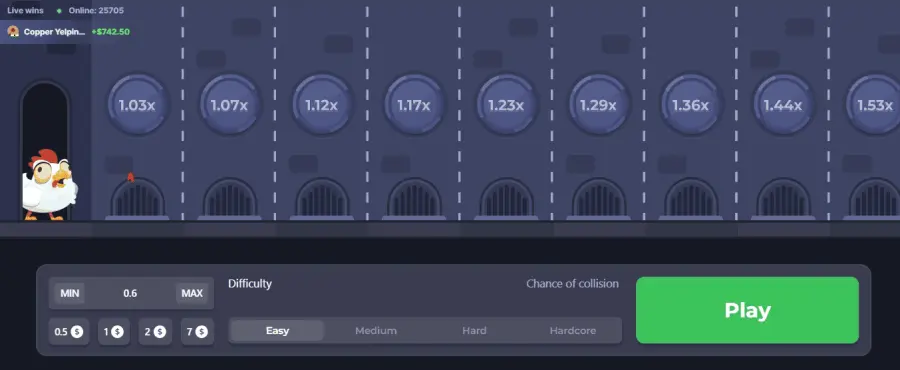
Open the demo to learn rhythm, then mirror that cadence with minimal live stakes as you wire exits. You’ll find the tile under Crash, Arcade, or Mini-Games rather than traditional reels. The official copy frames a step-by-step path toward a reward, which is why discipline beats improvisation. Pick Easy or Medium while you’re practicing to keep decision count high. Use auto-cash-out as scaffolding and raise targets only after consistent control. Keep a 50–100-round buffer so variance has room to average out. Remember that a burst ends a round instantly with your stake gone if you delay the exit. The original’s higher RTP smooths drift slightly, but session variance still rules. The 2.0 build extends many runs and punishes late greed more noticeably. Log outcomes and stick to written targets while exploring chicken road game online and the broader chicken road online game family.
Open the game lobby and find chicken road game online in crash or mini-games
Search by name, verify InOut Games in the info panel, and check difficulty labels for the four fixed modes. If your lobby gates the demo, compare pacing and labels with a catalog demo first. Favor integrations that show RTP and volatility guidance directly in the info panel. Add the title to favorites to avoid look-alikes crowding your next login. Try a dozen demo rounds and write down average steps per difficulty on your device. Confirm whether auto-cash-out sliders work cleanly in your browser. Check that the cash-out button is reachable and responsive at your screen resolution. If labels mismatch across language settings, trust the provider wording over translations. Keep the catalog tab for quick cross-checks between sessions. That tiny prep saves nerves during chicken road rounds.
Set bet in USD, pick difficulty, and learn when to cash out
Start with the lowest stake and pick Easy to wire the habit of early exits without pressure. Move to Medium when you can consistently hit planned targets ten rounds in a row. Avoid Hard and Hardcore until logs show discipline under small swings. Pre-commit to a cash-out point and press the button the moment it appears. Use conservative auto-cash-out during learning to counter “just one more step” impulses. Keep sessions short to prevent fatigue from eroding timing. When a round bursts, resist chasing; variance clusters are normal in burst mechanics. Downshift stake size if you feel rushy or impatient. Rehearse the same target in demo after any long break. That consistency matters more than chasing a single spectacular run on chickenroad.
Understand multipliers, volatility, and round-ending risk conditions
Multipliers rise with exposure time, but the risk curve steepens as you continue. Volatility differs by mode, and Hardcore concentrates outcomes into sharper swings. Original lists higher RTP, so long-run drift is kinder if exits are strict. The 2.0 build lowers RTP and stretches many paths, increasing temptation near the end. Treat mode selection as a practical hedge against mood and fatigue. Keep at least fifty to a hundred decisions available at your stake for variance to smooth. Don’t rely on “due” thinking; independent rounds don’t remember the last burst. Use logs to tune targets rather than guessing from hunches in the moment. If the lobby shows a fairness or seed page, bookmark it for reassurance during cold patches. Those habits keep chicken road sessions calm while you practice exits in USD.
Rtp, volatility, and limits by mode
| Mode | Typical risk profile | RTP (by version) | Example bet range (USD) | Round length (typical) | Cash-out options | Max win path example (USD) |
|---|---|---|---|---|---|---|
| Easy | Lower variance, short hops | 98% vs 95.5% | 0.10–5 | Short | Manual/Auto | Early exits, small multiples |
| Medium | Balanced tempo and risk | 98% vs 95.5% | 0.10–10 | Short-medium | Manual/Auto | Two to three hops then leave |
| Hard | High variance spikes | 98% vs 95.5% | 0.20–20 | Medium | Manual/Auto | Larger jumps with strict limit |
| Hardcore | Very high variance | 98% vs 95.5% | 0.20–50 | Medium-long (2.0 longer) | Manual/Auto | End-goal chase only with buffer |
| Original (meta) | Faster cadence feel | 98% | 0.10–20 | Short | Manual/Auto | Up to USD 20,000 |
| 2.0 (meta) | Stretched paths | 95.5% | 0.10–50 | Medium-long | Manual/Auto | Up to USD 20,000 |
| Demo | Risk-free practice | N/A | N/A | N/A | Practice only | Learn exits |
| Fairness flag | Transparency varies | — | — | — | Hash/explainer where offered | Confidence aid |
| Catalog cross-check | Spec sanity | — | — | — | — | Use when labels differ |
First-round quick start: keep it simple, then repeat the same cadence live.
- Open the lobby and search chickenroad, confirming provider and version.
- Choose Easy so you learn timing without draining your buffer.
- Set the smallest EUR stake that still feels meaningful.
- Start the round and cash out exactly at your pre-set target.
- Log the outcome, breathe, and stop when focus dips.
Practice a dozen demo rounds whenever you return from a break; short refreshers keep exits crisp for chicken road game online and the broader chicken road online game lineup.
Advanced steps: chicken road 2 game modes, rtp, and risk control
The 2.0 release keeps four modes but lowers RTP and lengthens many paths, which nudges you toward later exits if you aren’t careful. Treat that shift as a reason to write stricter targets and shrink stakes until your notes show stability. Visual pacing improves clarity but also tempts “one more step,” so auto-cash-out is useful during adaptation. Separate logs for the two versions prevent blended impressions from steering decisions. Use shorter, focused sessions to avoid fatigue-driven late exits. Downshift difficulty when impatience shows up, because variance will magnify lapses. If your lobby surfaces fairness or seed tools, keep them handy for sanity checks. Remember that similar max-win headlines don’t mean identical journeys. When in doubt, return to demo to refresh timing. Those habits turn chicken road 2 game into a controlled routine rather than a swingy gamble in EUR.

What changes in chicken road 2 game compared to the original release
You will notice longer average runs, a reduced RTP listing, and slightly different rhythm in how safe steps feel early. The theme shifts into a traffic dash, yet the core mechanic remains a crash-style burst risk. Because long-run return is lower, scaling too fast feels harsher during cold patches. Keep difficulty on Easy or Medium until your exits are habitually early. Avoid Hardcore unless your log shows consistent control across dozens of rounds. Plan exits on paper and rehearse them in demo before any live session. Auto-cash-out pairs well with 2.0’s cadence while you adapt. Treat the original as a training ground and 2.0 as the stricter teacher. Downshift stake size if you find yourself hesitating near targets. Small, disciplined decisions keep chicken road 2 game calm over weeks, not minutes.
Adjust volatility by mode to match session bankroll strategy
Think in decisions, not minutes: you want enough rounds to let discipline matter. Easy preserves decision count and resets nerves after rough patches. Medium works once exits are muscle memory and logs look steady. Hard and Hardcore condense risk, so treat them as optional tests, not default settings. On 2.0, shorten sessions and pre-declare stop-win and stop-loss boundaries. If impatience shows, step down difficulty instead of raising stakes. Keep a tally of average hops to stay honest about cadence. Screenshots of planned exits hit are powerful reinforcement. When your notes show drift, pause and refresh in demo. That’s how you keep chicken road 2 aligned with your EUR plan.
Track rtp differences and the impact on expected returns over time
RTP is budget guidance, not prophecy, so separate statistics by version to avoid confusion. Original’s higher listing softens drift if exits stay strict and stakes stay small. The 2.0 listing means you should tighten targets and reduce stake size until data says otherwise. Don’t chase “due” wins; independent rounds don’t remember prior bursts. Review weekly trends rather than single sessions to tune targets rationally. If your focus slips, end the block and come back fresh. Use catalog notes as anchors when lobbies update wording. Keep round counts high to let discipline average variance. When switching versions in a single sitting, downshift stakes for the 2.0 block. That data-first approach stabilizes chicken road 2 trends in EUR.
Is it safe and legit? chicken road opinions and fairness facts
Safety is a checklist, not a hunch, so verify provider, license number, demo access, and fairness links before any stake. Catalog pages for both versions give you neutral anchors for wording and RTP numbers. Ignore miracle-strategy pitches and treat any “guaranteed” language as a red flag. Read complaints for specifics like capped stakes, timer expiries, or weekend delays rather than vibes. Keep your own play ledger to separate variance from payout friction. If labels mismatch across languages or mirrors, trust provider wording first. Save support transcripts that confirm wagering contribution and caps for crash titles. Prefer venues with visible audit badges and click-through details. Run a demo and a support ping as a responsiveness test. Those habits make chicken road opinions threads easier to interpret alongside your notes for opinions chicken road.
Recognize official versions from inout games and avoid clones or scams
Match the provider name, difficulty labels, and theme beats directly to the official pages. The original highlights a goal-oriented path, while 2.0 shifts to a traffic dash motif. Catalog entries repeat these traits and list demo buttons for quick verification. Clones often hide attribution, inflate claims, or gate demos behind signup pages. When demo behavior and lobby behavior disagree, assume the lobby is mislabeling the build. Keep two neutral catalogs bookmarked for quick comparisons during updates. Avoid sites selling foolproof patterns because crash games don’t permit guarantees. Verify RTP text in info panels and compare to catalog listings. If fairness links are just images, ask support for the actual explanation. With that routine, fake chicken road opinions pages become easy to spot.
Check casino licensing, audits, and provably fair statements before playing
Look for a clickable regulator number in the footer and scan the fairness page for real explanations. Ask support to provide the link and keep the transcript with timestamps. Confirm payout windows and weekend handling before moving funds in EUR. Compare independent review timelines with your own test withdrawal to set expectations. Save PDFs of cashier pages showing fees and limits to anchor escalations. If terms are vague, press for clarity or pick a new venue. Treat “provably fair” as a starting point rather than a guarantee. Combine catalog facts with lobby disclosures to determine consistency. Keep your ledger tidy so evidence replaces guesswork. That approach makes opinions chicken road research practical rather than noisy.
Read recent chicken road opinions to spot payout or verification issues
Player comments are noisy, but useful when they include dates, amounts, and methods. Look for patterns like withdrawal pauses on weekends or bonus caps that trigger disputes. Discount one-line praise and focus on detailed, balanced posts. Mirror small test payout sizes cited by credible reports to compare your venue’s speed. Distinguish clone domains from official casinos to avoid conflating problems. Keep screenshots of your own transactions and chat logs for swift case numbers. Over time, your notes beat crowd chatter, and you can decide whether to stay or switch based on your chicken roads diary.
Red flags vs. checks (quick list): skim this before any deposit.
- No provider name or mismatched difficulty labels on the game page.
- RTP missing from info panels or inconsistent with catalogs.
- License number absent or not clickable to a regulator site.
- “Instant” payout claims that ignore pending windows and KYC.
- Complaint history focused on wager-cap violations during bonuses.
- Support dodges when asked for fairness links or contribution tables.
Keep timestamped screenshots of every step; small evidence settles big debates fast when sessions involve chicken road opinions.
- The original build is widely listed with a high RTP for a crash-style title, which softens long-run drift for players who commit to early, disciplined exits over many rounds.
- Four fixed difficulty modes make onboarding quick and allow you to “set” volatility to your comfort level while you learn on mobile or desktop without complex rules.
- HTML5 demos are easy to access across reputable catalogs, letting you verify labels and practice timing on phones before any live stakes.
- Transparent, readable info panels on good integrations make rules and mode names easy to match with provider wording for consistent expectations.
- As a burst mechanic, rounds can end instantly before a cash-out, and new players who delay exits often face fast balance swings despite careful planning.
- Version 2.0 lists a lower RTP than the original, so sloppy late exits feel harsher and require smaller stakes and stricter targets to keep variance manageable.
- Labeling and contribution policies vary by casino, so you must verify provider, RTP disclosure, and bonus contribution rather than assuming consistency.